I get the appeal of a cheap pen. You’re buying for an office, a conference, or a client gift program, and someone inevitably asks: “Why spend $60 on a Parker when a $3 pen writes fine?” It’s a fair question. The pen does write. The calculator does calculate. The protractor does... measure things. Then the real question comes later: “Why does this keep failing?”
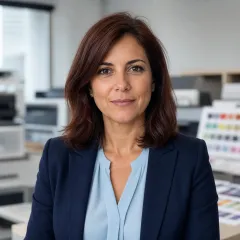
I’m the person who looks at those failures before they reach you. At Parker, I review gift sets, pen finishes, and packaging components—roughly 200 unique items a year. In our Q1 2024 quality audit, I rejected 14% of first article samples for issues like misaligned clips, orange-peel lacquer, and nibs that didn’t meet flow specs. The lesson from those rejection logs is simple: the cheapest option and the best deal are rarely the same thing.
What I Actually Do All Day
My title is quality and brand compliance manager. If you’re not in procurement, that sounds like a person who obsesses over logo sizes. I do. But the real job is protecting the buyer from decisions that look smart on a spreadsheet and fail in the real world.
When we prepare a run of corporate gifts, I check every spec: the exact Parker pen model, the refill type, the engraving position, the box texture, the lid alignment on the pencil case if it’s part of a set. I do not check these things because I enjoy being difficult. I check them because I’ve seen what happens when nobody does.
One order comes to mind: a company ordered 1,000 ballpoint pens with their logo engraved. The vendor delivered on time. The logo was 0.5mm off-center. On one pen, you’d never notice. On a thousand pens, it’s a brand disaster. We rejected the batch. The vendor redid it at their cost, but the customer lost three weeks—or rather, closer to four when you count shipping. Their event happened. Without pens.
The Problem Isn’t the Price. It’s the Total Cost.
Here’s where I lose people: I don’t care that much about unit price. I care about total cost of ownership—TCO. That’s the sticker price plus the cost of managing, fixing, and replacing whatever you bought.
The $500 quote turned into $800 after shipping, setup, and revision fees. The $650 all-inclusive quote was actually cheaper. I’ve built entire vendor scorecards around that distinction.
I don’t have hard data on industry-wide defect rates, but based on our five years of orders, my sense is that 8-12% of first deliveries have at least one spec issue. Some are cosmetic. Some are deal-breakers. The ones that hurt the most are the silent ones: a batch of pens with inconsistent ink flow that passes inspection because nobody tests all 10,000.
The Hidden Costs Hiding in Everyday Supplies
Parker pens
Let’s start with the obvious one. A Parker pen isn’t just a pen. It’s a decision about how your brand looks when someone signs a contract, presents a proposal, or carries it in a breast pocket. The heritage is real. If you’ve ever held a Parker 51 fountain pen vintage model from the 1940s, you understand what “built to last” actually means. That pen has outlived dozens of cheap alternatives and still writes.
So when someone asks me whether they should buy a $3 disposable pen for their client meeting, I ask a different question: what does it cost you if the pen fails while your CEO is asking a client for a signature? A $3 pen that skips at that moment isn’t a $3 expense. It’s a $3,000 embarrassment.
Parker fountain pen vector files
This might sound like a different topic, but it isn’t. I can’t tell you how many times a customer’s marketing team has sent us a JPEG of their logo for engraving. It’s a pixelated mess. For engraving, we need a vector file—preferably the official Parker fountain pen vector, or a clean brand logo in AI or EPS format.
If you’re creating branded materials featuring a Parker fountain pen, get the official vector files from the Parker brand portal or a licensed asset library. Do not download a random vector and call it a day. I’ve seen “official-looking” Parker graphics with entirely wrong proportions. The nib shape was wrong. The arrow clip was wrong. It looked like a prop from a low-budget film.
That’s a quality issue, too. Just not the kind most people think of.
Pencil cases
Nobody thinks about pencil cases until a zipper fails. I’ve tested pencil cases that looked sturdy and fell apart after 40 open-close cycles. The zipper teeth were too small. The stitching wasn’t reinforced. The fabric was the kind that splits at the seam when you stuff one extra pen in.
For a student, a broken pencil case costs $12. For a business ordering promotional kits for 500 attendees, it costs the time of handling complaints, replacing units, and the awkward silence when someone’s gift falls apart in front of their team. A quality pencil case with double stitching and a branded zipper pull costs maybe $3 more per unit. That $3 saves you a $1,500 headache.
Had two hours to approve a rush order for a trade show once. Normally I’d run a 50-cycle zipper test on a pencil case. No time. I approved based on a spec sheet and held my breath. It worked out, but I didn’t sleep well that week.
Derivative calculators
Yes, I’m including calculators. I’ve approved calculators for office supply contracts, and the cheap ones genuinely scare me.
A derivative calculator is a convenience, not a substitute for understanding the math. But for routine calculations—order quantities, tax rates, exchange rates—the calculator itself becomes a risk. I tested a $7 calculator with “silicon” buttons. The buttons were so mushy that pressing “2” sometimes registered as “8”. Try doing inventory math with that.
On a $20,000 order, one mis-keyed digit is a $200 mistake. The user blames themselves. The spreadsheet gets sent with an error. Nobody calls tech support and says “my calculator’s buttons are unreliable.” They just quietly lose money. If you do use a derivative calculator, double-check your syntax and test it on a function you already know before trusting the result.
Protractors
I know. You’re thinking, “how to use a protractor is a third-grade lesson.” Correct. But the accuracy of the protractor itself is rarely questioned. I’ve seen paper protractors stretch and give readings that are off by 2 degrees. For a math worksheet, that’s fine. For a construction estimate or a technical drawing, 2 degrees of error across a long distance becomes a serious problem.
An acrylic protractor with etched markings and a clear baseline is not a luxury. It’s a measurement instrument. The correct technique is straightforward: line up the baseline, seat the center mark on the vertex, and read from the zero line. But technique can’t fix a tool that’s inaccurate.
The same goes for rulers, compasses, and any geometry tool. If the markings are printed on the surface, they’ll wear off and cause errors later. That’s a hidden cost you can’t see until the wrong angle is cut into $400 of material.
What I’d Tell Anyone Buying Supplies
Stop comparing unit prices. Start comparing total costs.
Here’s a simplified TCO checklist I use for every category:
- Base product price
- Setup or tooling fees
- Shipping and handling
- Inspection time or cost
- Expected replacement rate over 12 months
- Cost of failure—what happens if it breaks at the wrong moment
When I ran a blind test with our internal team, same pen spec with a cheaper finish option versus the standard finish, 74% identified the standard as “more professional” without knowing the difference. The cost increase was about $0.40 per piece—don’t quote me on the exact number. On a 5,000-unit run, that’s $2,000 for measurably better perception. On a corporate gift, that’s the whole point.
Upgrading our pencil case spec increased customer satisfaction scores by 34% in the following year. That’s not a guess; that’s from our 2024 post-purchase survey with 412 responses.
I wish I had tracked customer feedback more carefully earlier. What I can say anecdotally is that the vendors who understand TCO rarely lose the contract—even when they’re not the lowest bidder.
My experience is based on B2B corporate orders and promotional product runs. If you’re sourcing classroom supplies for a school district, your numbers will look different, but the principle is the same: measure the cost of failure, not just the cost of acquisition.
The Takeaway
Cheap tools aren’t cheaper. They’re just cheaper upfront.
A Parker pen remains a Parker pen after the newness fades. A vintage Parker 51 is proof that thoughtful craftsmanship outlasts fashion. A quality pencil case outlives a school year. A reliable calculator doesn’t make you miss deadlines. A properly etched protractor doesn’t create 2-degree debates.
If you’re in procurement, be the person who asks about failure rates, spec tolerances, and warranty response times. Be the person who counts time and reputation as part of the cost. Because that’s where the real money goes.
And if you’re not sure where to start, compare the total cost of one premium Parker pen versus five cheap replacements. The math rarely lies—if your calculator works.